Hydrogen Acts as a Therapeutic Antioxidant

Hydrogen Acts As A Therapeutic Antioxidant By Selectively Reducing Cytotoxic Oxygen Radicals


Date : 07/05/2007

Acute oxidative stress induced by ischemia-reperfusion or inflammation causes serious damage to tissues, and persistent oxidative stress is accepted as one of the causes of many common diseases including cancer. We show here that hydrogen (H2) has potential as an antioxidant in preventive and therapeutic applications. We induced acute oxidative stress in cultured cells by three independent methods. H2 selectively reduced the hydroxyl radical, the most cytotoxic of reactive oxygen species (ROS), and effectively protected cells; however, H2 did not react with other ROS, which possess physiological roles. We used an acute rat model in which oxidative stress damage was induced in the brain by focal ischemia and reperfusion. The inhalation of H2 gas markedly suppressed brain injury by buffering the effects of oxidative stress. Thus H2 can be used as an effective antioxidant therapy; owing to its ability to rapidly diffuse across membranes, it can reach and react with cytotoxic ROS and thus protect against oxidative damage.

PDF Download

Hydrogen for Bipolar Disorder and Schizophrenia

Molecular hydrogen: an overview of its neurobiological effects and therapeutic potential for bipolar disorder and schizophrenia


Date : 06/06/2013

Hydrogen gas is a bioactive molecule that has a diversity of effects, including anti-apoptotic, anti-inflammatory and anti-oxidative properties; these overlap with the process of neuroprogression in major psychiatric disorders. Specifically, both bipolar disorder and schizophrenia are associated with increased oxidative and inflammatory stress. Moreover, lithium which is commonly administered for treating bipolar disorder has effects on oxidative stress and apoptotic pathways, as do valproate and some atypical antipsychotics for treating schizophrenia. Molecular hydrogen has been studied pre-clinically in animal models for the treatment of some medical conditions including hypoxia and neurodegenerative disorders, and there are intriguing clinical findings in neurological disorders including Parkinson’s disease. Therefore, it is hypothesized that administration of hydrogen molecule may have potential as a novel therapy for bipolar disorder, schizophrenia, and other concurrent disorders characterized by oxidative, inflammatory and apoptotic dysregulation.

PDF Download

Hydrogen with Therapeutic Potential

Hydrogen: another gas with therapeutic potential


Date : 02/01/2010


Cardinal and colleagues describe the use of molecular hydrogen, the most abundant molecule in the universe, as a treatment for chronic allograft nephropathy (CAN) in a rat model of kidney transplantation. They demonstrate that the addition of hydrogen to the drinking water results in a decrease in the severity of CAN and increased graft survival, and they provide evidence that the mechanism of action could be due to a reduction in reactive oxygen species.

PDF Download

Hydrogen is Great for Skin

Molecular Hydrogen In Water Is Great For Skin


Date : 2013-2018

The desire to have healthy, elastic, wrinkle-free, and young looking skin dates back to primeval times. One of the ways (which is still used today) to try and accomplish this is the ancient practice of bathing in springs and mineral waters.However, unlike most conventional practices of lotions, creams, oils, powders and other cosmetics that may not help and/or even have negative side effects,3 bathing in specific waters that have reductive characteristics seems to have great therapeutic application.One study tested a mineral water with reductive characteristics (most likely due to dissolved molecular hydrogen) and a prepared water containing molecular hydrogen. The results revealed that bathing in both of these waters decreased the oxidation-reduction potential (ORP) of human skin. This is an important observation because healthy skin has reductive characteristics, and the ORP of the skin increases by oxidative damage (from sun exposure) and also by aging (as measured by lipid-peroxide levels). This relationship between redox potentials of the skin and aging has been investigated in more detail and shows that reductive waters lower the oxidation of the skin. Bathing in hydrogen water not only reduced the ORP of skin, but also improved its elasticity. Moreover, treating bleached hair with this water gave an improvement in fluency and gloss.

PDF Download

Hydrogen Improves Obesity and Diabetes

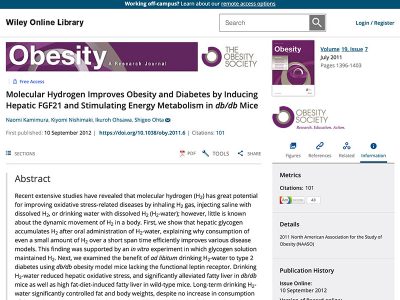
Molecular Hydrogen Improves Obesity and Diabetes by Inducing Hepatic FGF21 and Stimulating Energy Metabolism in db/db Mice


Date : 03/02/2011

Recent extensive studies have revealed that molecular hydrogen (H2) has great potential for improving oxidative stress-related diseases by inhaling H2 gas, injecting saline with dissolved H2, or drinking water with dissolved H2 (H2-water); however, little is known about the dynamic movement of H2 in a body. First, we show that hepatic glycogen accumulates H2 after oral administration of H2-water, explaining why consumption of even a small amount of H2 over a short span time efficiently improves various disease models. This finding was supported by an in vitro experiment in which glycogen solution maintained H2. Next, we examined the benefit of ad libitum drinking H2-water to type 2 diabetes using db/db obesity model mice lacking the functional leptin receptor. Drinking H2-water reduced hepatic oxidative stress, and significantly alleviated fatty liver in db/db mice as well as high fat-diet-induced fatty liver in wild-type mice. Long-term drinking H2-water significantly controlled fat and body weights, despite no increase in consumption of diet and water. Moreover, drinking H2-water decreased levels of plasma glucose, insulin, and triglyceride, the effect of which on hyperglycemia was similar to diet restriction. To examine how drinking H2-water improves obesity and metabolic parameters at the molecular level, we examined gene-expression profiles, and found enhanced expression of a hepatic hormone, fibroblast growth factor 21 (FGF21), which functions to enhance fatty acid and glucose expenditure. Indeed, H2 stimulated energy metabolism as measured by oxygen consumption. The present results suggest the potential benefit of H2 in improving obesity, diabetes, and metabolic syndrome.

PDF Download

WHO – Translation of China Government Using OxyHydrogen Treatment on Covid-19 Patients

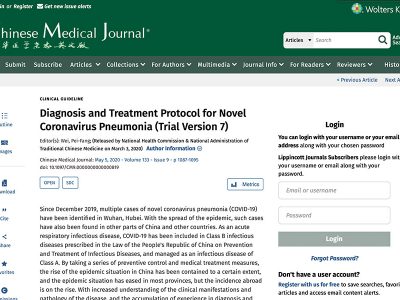
Diagnosis and Treatment Protocol for Novel Coronavirus Pneumonia


Date : 03/03/2020


Since December 2019, multiple cases of novel coronavirus pneumonia (NCP) have been identified in Wuhan, Hubei. With the spread of the epidemic, such cases have also been found in other parts of China and other countries. As an acute respiratory infectious disease, NCP has been included in Class B infectious diseases prescribed in the Law of the People's Republic of China on Prevention and Treatment of Infectious Diseases, and managed as an infectious disease of Class A. By taking a series of preventive control and medical treatment measures, the rise of the epidemic situation in China has been contained to a certain extent, and the epidemic situation has eased in most provinces, but the incidence abroad is on the rise. With increased understanding of the clinical manifestations and pathology of the disease, and the accumulation of experience in diagnosis and treatment, in order to further strengthen the early diagnosis and early treatment of the disease, improve the cure rate, reduce the mortality rate, avoid nosocomial infection as much as possible and pay attention to the spread caused by the imported cases from overseas, we revised the Diagnosis and Treatment Protocol for Novel Coronavirus Pneumonia (Trial Version 6) to Diagnosis and Treatment Protocol for Novel Coronavirus Pneumonia (Trial Version 7).

PDF Download

Molecular Hydrogen as a Potential Clinically Applicable Radioprotective Agent Especially for Cancer Patient

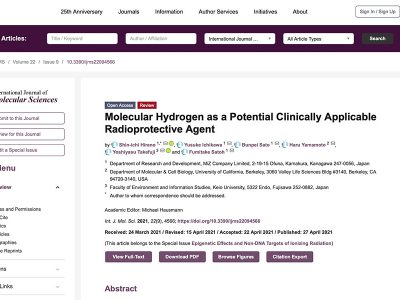
Molecular Hydrogen as a Potential Clinically Applicable Radioprotective Agent


Date : 27/04/2021

Although ionizing radiation (radiation) is commonly used for medical diagnosis and cancer treatment, radiation-induced damages cannot be avoided. Such damages can be classified into direct and indirect damages, caused by the direct absorption of radiation energy into DNA and by free radicals, such as hydroxyl radicals (•OH), generated in the process of water radiolysis. More specifically, radiation damage concerns not only direct damages to DNA, but also secondary damages to non-DNA targets, because low-dose radiation damage is mainly caused by these indirect effects. Molecular hydrogen (H2) has the potential to be a radioprotective agent because it can selectively scavenge •OH, a reactive oxygen species with strong oxidizing power. Animal experiments and clinical trials have reported that H2 exhibits a highly safe radioprotective effect. This paper reviews previously reported radioprotective effects of H2 and discusses the mechanisms of H2, not only as an antioxidant, but also in intracellular responses including anti-inflammation, anti-apoptosis, and the regulation of gene expression. In doing so, we demonstrate the prospects of H2 as a novel and clinically applicable radioprotective agent.

PDF Download

MOH 2016 Article On Hypnotherapy

Health Technology Assessment Section Medical Development Division Ministry Of Health Malaysia 020/2016


Source : MOH 2016 Article On Hypnotherapy https://www.zenelandhealthcare.com/wp-content/uploads/2021/06/MOH-2016-Article-On-Hypnotherapy.pdf

Date : 2016

Clinical hypnosis/hypnotherapy is one of the modalities in mind-body medicine. The application of hypnotherapy has increased among Western medical community due to extensive research done on the effectiveness of the therapy and awareness of its benefits in treating health problem. Findings from numerous modern cognitive, linguistic and personality research on hypnotherapy have caused a growing use of the therapy in medical specialities, psychiatry, psychology and social work.

Managing pain becomes a constant challenge to physician. The usage of sedative and narcotic drugs for pain management still has significant healthcare implication even with advancement in pharmacological treatment and procedural pain management. Clinical hypnotherapy provides an alternative or adjunctive non-pharmacological approach for managing pain that can potentially be cost-effective. Depression and anxiety were among the most common reasons for individuals to seek complementary treatments apart from medications. Pharmacological treatment has limitations in both efficacy and tolerability. While traditional cognitive behaviour therapy is a known efficacious psychotherapy for treatment of both depression and anxiety, hypnotherapy could provide an option of integrating different treatment modalities to enhance treatment outcomes. Hypnotic approaches also could be used in many different ways to enhance behavioural treatment for addiction. To date, hypnotic research on the treatment of addiction is primarily for smoking cessation.

In recent years, there is an increasing number of local private health centres and institutions that offer hypnotherapy treatment and training to become certified hypnotherapist. Furthermore, there is also a growing interest among local mainstream healthcare practitioners on clinical hypnotherapy and its applications.

This technology review was requested by the National Advisor for Psychiatric Services, Ministry of Health, Malaysia to assess the evidence on clinical hypnosis/hypnotherapy practice for patients with pain, anxiety, depression and addiction.

MaHTAS Newsletter – Hypnosis for Pain Management Anxiety Depression and Addiction

Clinical Hypnosis / Hypnotherapy


Source : MaHTAS e-Newsletter Vol.22– Page 5 https://www.moh.gov.my/moh/resources/Penerbitan/Buletin/MaHTAS%20e-Newsletter/MaHTAS%20e-Newsletter%20Vol.22.pdf

Date : July - Dec 2017

Clinical hypnosis/hypnotherapy is one of the modalities in mind-body medicine which is increasingly used in medical specialities, psychiatry, psychology and social work. A technology review was conducted and showed hypnosis reduced acute procedural pain and is at least as effective as other complementary therapies. When compared to standard care control, hypnosis produced significantly lower pain ratings. Hypnotic analgesia seemed to be especially effective in minor surgical procedures. Interventions with more than one sessions reported more significant effect than did studies involving only one session. Shorter intervention time (≤ 30 minutes) and performed before the day of procedure produced the best results. For women in labour, the women who received hypnosis were less likely to use pharmacological pain relief or analgesia than those in control groups, however no significant difference was seen for sense of coping with the labour and satisfaction with pain relief.

In chronic pain involving physical disability group, hypnosis offered effective short-term pain relief. For elderly patients with chronic pain, hypnosis provided more prolonged analgesic effect as adjunctive therapy to pharmacological treatment compared to massage during hospitalisation. There was no difference in long term effect of pain intensity and mood between the hypnosis and massage groups.

In reducing exam anxiety, hypnosis was an effective therapy. A combination of hypnotherapy with other psychotherapy was more effective at reducing test anxiety than the hypnosis alone and had positive prolonged effects. On emotional distress (anxiety, depression) in adults undergoing surgical or medical procedures, hypnosis was found to be effective especially when given preoperatively or before procedure compared to intraoperatively or during procedure. For cancer patients with anxiety, hypnosis was able to reduce anxiety , especially for paediatric cancer patients who experience procedure-related stress. Patient was able to achieve deeper trance state when hypnosis was delivered by live hypnotherapist compared to audio hypnosis. The treatment was more effective when it combined therapist delivery with selfhypnosis.

In conclusion, hypnotic intervention was associated with a moderate reduction in depressive symptoms. Hypnotherapy was not found to be superior compared to other interventions such as brief attention, pharmacological treatment and psychological treatment for smoking cessation.

By Dr. Erni Zurina