Author - admin

Mirror UK News – World First Deep Brain Surgery Using Hypnosis Instead Of Anaesthetic Cures Elderly Patient Trembling Hands

Mirror UK News - World First Deep Brain Surgery Using Hypnosis Instead Of Anaesthetic Cures Elderly Patient Trembling Hands


Date : 10/01/2017

The Jena University Hospital in the German state of Thuringia.

Surgeons have completed the world’s first deep brain surgery using hypnosis instead of an anaesthetic to control the patient’s pain.

Doctors carried out the deep brain stimulation procedure to cure the 73-year-old patient’s severe trembling hands.

In the procedure, the brain regions which are responsible for the tremor were electrically stimulated, causing the tremor to be effectively suppressed so the patient can for example eat and write again undisturbed.

As fine electrodes are implanted directly deep into the brain, they are often referred to as "brain pacemakers".

The 73-year-old patient from Thuringia, Germany, whose tremor did not adequately improve with medication, is reportedly very satisfied with the result of the six-hour operation by the team from the University Hospital of Jena.

Normally, such medical interventions are done with anaesthesia.

After the electrodes have been placed in the affected brain area, the patients are woken up to check whether the electrodes are correctly placed and whether the tremor is suppressed.

But the sedative effect of anaesthesia "can lead to distorted results" said Dr Rupert Reichart, head of the neurosurgery department.

He said: "Under hypnosis there are no such side-effects of anaesthesia.

"This is an enormous advantage to check whether the activation of the electrodes is successful."

During the surgery a team of anaesthetists was on standby. The clinic is one of the few centres in Germany offering deep brain stimulation, conducting about twelve such operations per year.

Dr Reichart provided the required speech hypnosis during the procedure and kept the patient in hypnosis during the entire operation, while colleague Dr Walter carried out the actual procedure.

Another doctor, Tino Prell, monitored the success of the procedure during the operation and after awakening the patient, who was not named in reports, from hypnosis.

Dr Prell said: "This procedure allows a so-far unprecedented check on the effect of the deep brain stimulation and thus a clearly better and targeted electrode installation than in the usual procedures under narcosis."

Dr Reichart emphasised that the hypnosis "has nothing to do with esotericism or tricks of pendulum-swinging TV magicians."

MOH 2016 Article On Hypnotherapy

Health Technology Assessment Section Medical Development Division Ministry Of Health Malaysia 020/2016


Source : MOH 2016 Article On Hypnotherapy https://www.zenelandhealthcare.com/wp-content/uploads/2021/06/MOH-2016-Article-On-Hypnotherapy.pdf

Date : 2016

Clinical hypnosis/hypnotherapy is one of the modalities in mind-body medicine. The application of hypnotherapy has increased among Western medical community due to extensive research done on the effectiveness of the therapy and awareness of its benefits in treating health problem. Findings from numerous modern cognitive, linguistic and personality research on hypnotherapy have caused a growing use of the therapy in medical specialities, psychiatry, psychology and social work.

Managing pain becomes a constant challenge to physician. The usage of sedative and narcotic drugs for pain management still has significant healthcare implication even with advancement in pharmacological treatment and procedural pain management. Clinical hypnotherapy provides an alternative or adjunctive non-pharmacological approach for managing pain that can potentially be cost-effective. Depression and anxiety were among the most common reasons for individuals to seek complementary treatments apart from medications. Pharmacological treatment has limitations in both efficacy and tolerability. While traditional cognitive behaviour therapy is a known efficacious psychotherapy for treatment of both depression and anxiety, hypnotherapy could provide an option of integrating different treatment modalities to enhance treatment outcomes. Hypnotic approaches also could be used in many different ways to enhance behavioural treatment for addiction. To date, hypnotic research on the treatment of addiction is primarily for smoking cessation.

In recent years, there is an increasing number of local private health centres and institutions that offer hypnotherapy treatment and training to become certified hypnotherapist. Furthermore, there is also a growing interest among local mainstream healthcare practitioners on clinical hypnotherapy and its applications.

This technology review was requested by the National Advisor for Psychiatric Services, Ministry of Health, Malaysia to assess the evidence on clinical hypnosis/hypnotherapy practice for patients with pain, anxiety, depression and addiction.

MaHTAS Newsletter – Hypnosis for Pain Management Anxiety Depression and Addiction

Clinical Hypnosis / Hypnotherapy


Source : MaHTAS e-Newsletter Vol.22– Page 5 https://www.moh.gov.my/moh/resources/Penerbitan/Buletin/MaHTAS%20e-Newsletter/MaHTAS%20e-Newsletter%20Vol.22.pdf

Date : July - Dec 2017

Clinical hypnosis/hypnotherapy is one of the modalities in mind-body medicine which is increasingly used in medical specialities, psychiatry, psychology and social work. A technology review was conducted and showed hypnosis reduced acute procedural pain and is at least as effective as other complementary therapies. When compared to standard care control, hypnosis produced significantly lower pain ratings. Hypnotic analgesia seemed to be especially effective in minor surgical procedures. Interventions with more than one sessions reported more significant effect than did studies involving only one session. Shorter intervention time (≤ 30 minutes) and performed before the day of procedure produced the best results. For women in labour, the women who received hypnosis were less likely to use pharmacological pain relief or analgesia than those in control groups, however no significant difference was seen for sense of coping with the labour and satisfaction with pain relief.

In chronic pain involving physical disability group, hypnosis offered effective short-term pain relief. For elderly patients with chronic pain, hypnosis provided more prolonged analgesic effect as adjunctive therapy to pharmacological treatment compared to massage during hospitalisation. There was no difference in long term effect of pain intensity and mood between the hypnosis and massage groups.

In reducing exam anxiety, hypnosis was an effective therapy. A combination of hypnotherapy with other psychotherapy was more effective at reducing test anxiety than the hypnosis alone and had positive prolonged effects. On emotional distress (anxiety, depression) in adults undergoing surgical or medical procedures, hypnosis was found to be effective especially when given preoperatively or before procedure compared to intraoperatively or during procedure. For cancer patients with anxiety, hypnosis was able to reduce anxiety , especially for paediatric cancer patients who experience procedure-related stress. Patient was able to achieve deeper trance state when hypnosis was delivered by live hypnotherapist compared to audio hypnosis. The treatment was more effective when it combined therapist delivery with selfhypnosis.

In conclusion, hypnotic intervention was associated with a moderate reduction in depressive symptoms. Hypnotherapy was not found to be superior compared to other interventions such as brief attention, pharmacological treatment and psychological treatment for smoking cessation.

By Dr. Erni Zurina

Hypnosedation For Breast Cancer Surgery

Hypnotherapy in the Operating Room


Source : TMC News https://www.tmc.edu/news/2018/03/hypnosis-operating-room/

Date : 09/03/2018

Doctors and researchers are using hypnosedation to manage pain and anxiety during certain breast cancer surgeries.

Led by Lorenzo Cohen, Ph.D., specialist at MD Anderson Cancer Center who performed the hypnosedation to a breast cancer patient, Beverly Levinson.

Hypnosedation to manage pain and anxiety during certain surgeries.

BBC News Dental Surgery

BBC News Dental Surgery


Date : 24/04/1999

Hypnosis can help to cut down the use of general anaesthesia in surgery, a hypnotherapy conference will hear.

Dr Robert Diaz an oral and facial surgeon at Manchester Royal Infirmary will tell the British Society of Experimental and Clinical Hypnosis that hypnotherapy can give patients a more pleasant experience in surgery and could cut NHS spending.

Their heart rate was dramatically lower, suggesting they were less stressed.

Dangerous

Wisdom teeth are normally removed under general anaesthetic which can be dangerous and unpleasant for patients.

"Hypnosis is a reasonable treatment option which can reduce the number of general anaesthetics given and increase safety," he said. "It could also save the NHS money as anaesthesia is expensive and patients have to stay longer in hospital afterwards, possibly overnight."

In control

Several dentists and doctors have incorporated the technique into their work for many years. Dentist John Gladstone says he has used it for more than 30 years. He started because he was terrified of the dentist's chair himself and wanted to help his patients.

"There are no chemicals involved and the patient is in control the whole time," he said. They are not unconscious, just relaxed."

One of his patients, Liz Cooper, said she was sceptical at first when Dr Gladstone suggested hypnotherapy when she had extensive crown work done. "I was aware of what was going on, but not of any sensation of pain," she said.

The British Dental Association, which has issued advice to dentists on how to gain hypnosis information and training, welcomed a call for an increase in the use of hypnosis in dentistry.

Spokeswoman Kate Cinamon said: "We would welcome wider use of hypnosis to relax patients who are anxious.

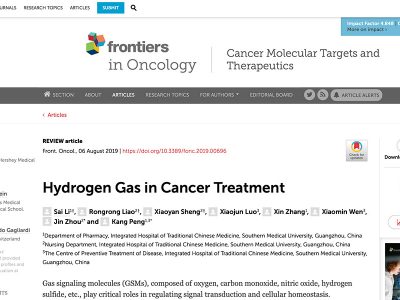
Hydrogen in Cancer Treatment

Hydrogen Gas in Cancer Treatment


Date : 06/08/2019

Gas signaling molecules (GSMs), composed of oxygen, carbon monoxide, nitric oxide, hydrogen sulfide, etc., play critical roles in regulating signal transduction and cellular homeostasis. Interestingly, through various administrations, these molecules also exhibit potential in cancer treatment. Recently, hydrogen gas (formula: H2) emerges as another GSM which possesses multiple bioactivities, including anti-inflammation, anti-reactive oxygen species, and anti-cancer. Growing evidence has shown that hydrogen gas can either alleviate the side effects caused by conventional chemotherapeutics, or suppress the growth of cancer cells and xenograft tumor, suggesting its broad potent application in clinical therapy. In the current review, we summarize these studies and discuss the underlying mechanisms. The application of hydrogen gas in cancer treatment is still in its nascent stage, further mechanistic study and the development of portable instruments are warranted.

PDF Download